A Guide to the Five Fire Extinguisher Classes
Posted January 8, 2024 by Cove


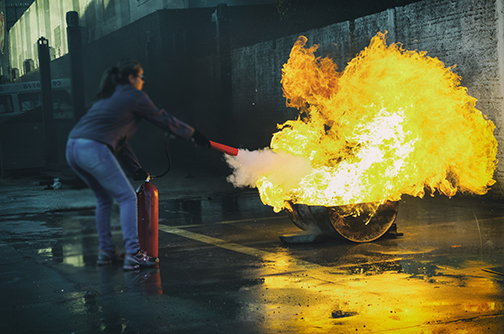
Although there is no penalty for not having a fire extinguisher in your home, the National Fire Protection Association (NFPA) recommends that homes install one fire extinguisher on every floor of the house. Fire extinguishers are able to smother fires faster and more efficiently than using water, or attempting to cover the fire with a tarp.
Fire extinguishers were created specifically for putting fires out quickly. However, contrary to what most people believe, not every fire extinguisher is the same. Fire extinguisher classes have been created to specify which fire extinguisher can be used to put out different fires.
The NFPA recommends that homeowners install a 2-A:10-B:C rated extinguisher. To help homeowners better understand which fire extinguishers they should install in their homes, we’ve created a complete guide for fire extinguishers. Buying fire extinguishers is easy as long as you know what you’re looking for. Here are the five different fire extinguisher classifications and how (and when) to use them.
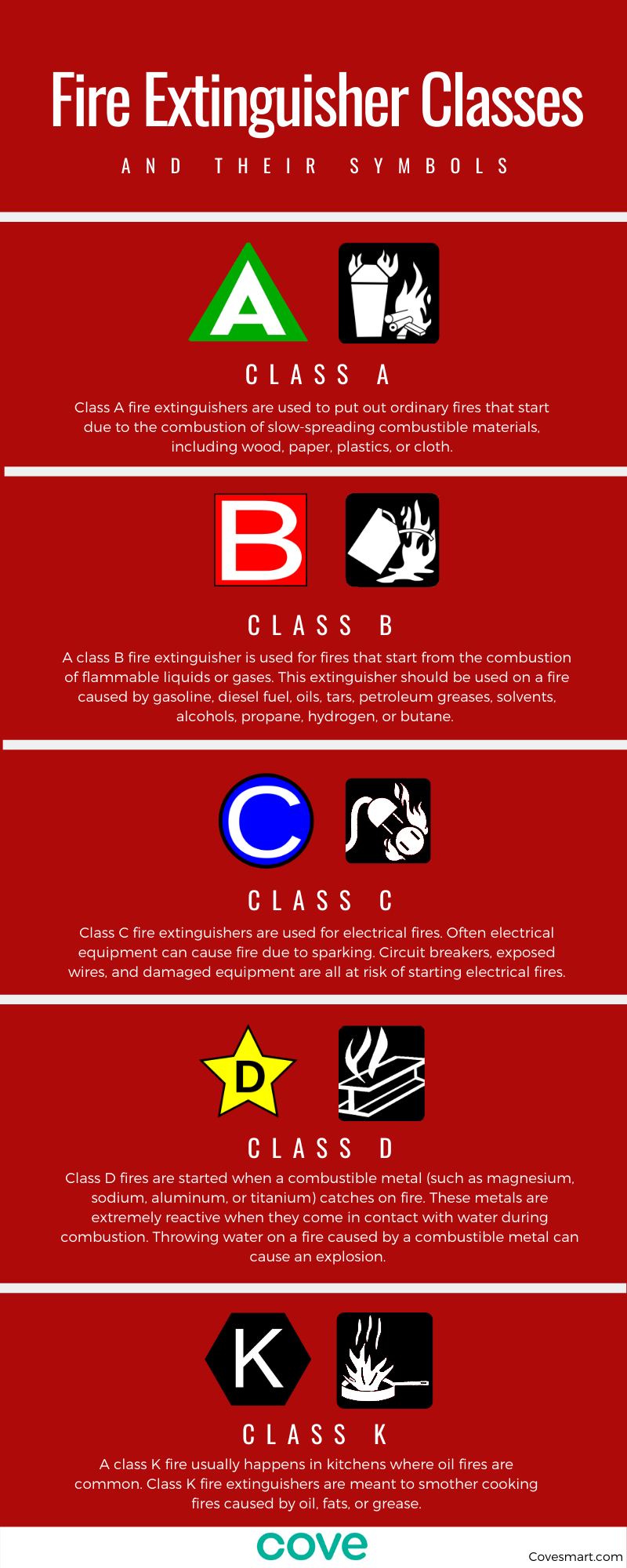
What Are the Five Classifications?
Fire extinguishers are separated into five main categories. Each category is meant to extinguish a different type of fire. The five different types of fire extinguishers are:
- **Class A Fire Extinguishers**
- **Class B Fire Extinguishers**
- **Class C Fire Extinguishers**
- **Class D Fire Extinguishers**
- **Class K Fire Extinguishers**
Some fire extinguishers can combine several of the types to create AB, AC, or ABC fire extinguishers. Like we mentioned, each type of extinguisher can be used for a different situation. They will contain certain chemicals like carbon dioxide, monoammonium phosphate, or dry powder or dry chemical. Others may be water mist extinguishers for natural wood fires.
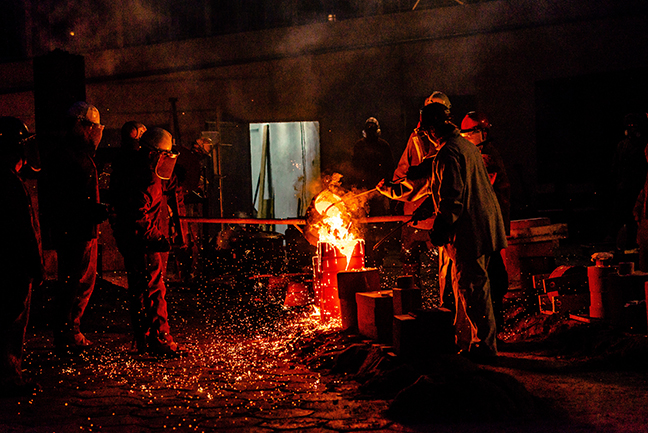
Class D fires are started when a combustible metal (such as magnesium, sodium, aluminum, or titanium) catches on fire. These metals are extremely reactive when they come in contact with water during combustion. Throwing water on a fire caused by a combustible metal can cause an explosion. The dry chemicals that are chosen to be used in a class D fire extinguisher are meant to completely smother the reacting metal without making the situation worse. When the metal is smothered, the fire will stop burning because there is a lack of oxygen. Metal fires are uncommon in residential homes and usually only happen in factories and commercial settings. In situations where metal fires are a possibility, all personnel will have been trained on how to react to a metal fire.

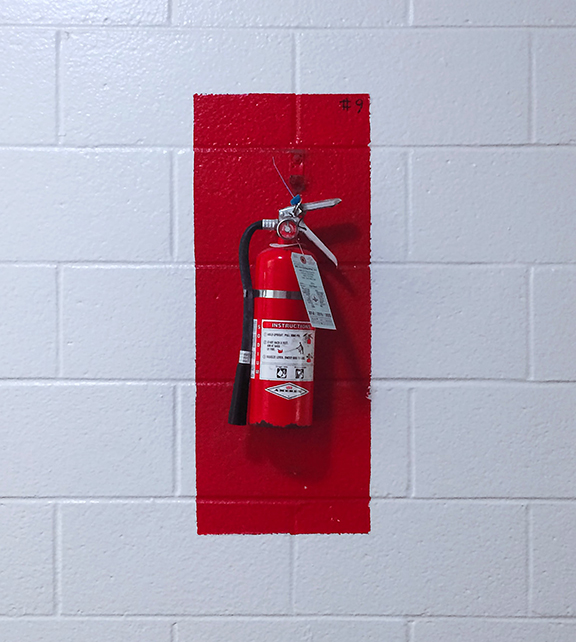
Where Can You Find the Classification of a Fire Extinguisher?
Every fire extinguisher is required to provide the classification on the labeling. Each classification will show a different symbol, shape, and letter to clarify which class the extinguisher is.
How Does a Fire Extinguisher Work?
Fires can be one of the deadliest and most destructive events that can happen to any family. Fires spread quickly and can reach temperatures over 1,000 degrees Fahrenheit in under three minutes. The NFPA reports over 2,510 civilian deaths every year due to fires. With something so catastrophic, can you really trust a fire extinguisher to do the job? Do fire extinguishers expire?
Fire extinguishers are reliable. In fact, in most cases, using a fire extinguisher is the most effective way to put out a fire without putting yourself in danger. However, fire extinguishers do expire, and they should be replaced, even if there's no expiration date on the device. A good rule of thumb is to replace the extinguisher every ten years. Fire extinguisher sizes may also affect the expiration date.
To use a fire extinguisher, follow the P.A.S.S. law. Each letter stands for a different step in using the fire extinguisher properly. If you do not feel comfortable with the extinguisher, it’s acceptable to ask someone else nearby to use the equipment instead. P.A.S.S. stands for: P. Pull the Pin. After you pull the pin in the fire extinguisher, the equipment will be ready to work. Without pulling the pin, the device will remain locked in place. A. Aim the extinguisher low to the floor and point the nozzle of the device towards the fire. When you press the handle, the dry chemicals will come out in force, so you will want to brace yourself. S. Squeeze the handle to release the smothering agents. You will want to do your best to remain steady. S. Sweep the nozzle back and forth over the fire, ensuring that you completely smother the edges of the fire. This will both stop the fire from growing and smother the existing fire. These steps will help you to remain calm during a fire in the house.
Elevate Your Smoke Detectors with a Home Security System
While having a fire extinguisher is a good way to protect your home from the danger of fires, having a smoke detector is another essential way you can protect your home. Smoke detectors as generally required in most businesses and homes in the U.S. Double check that you have the right amount and test that they are working and up-to-date.
**RELATED:** How Many Smoke Detectors Do I Need?
**RELATED:** Smoke Detector Placement Instructions
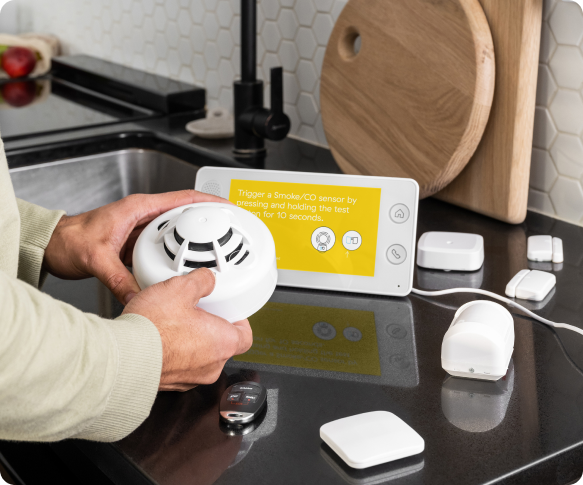
Why not take your smoke detectors to the next level and gain more safety from house fires? At Cove, you can customize your system to include cameras, sensors, and smoke detectors, which then connect to your alarm panel. That panel communicates with our professional monitoring services, so that anytime your smoke detector goes off, we will contact you to see if it's a false alarm. If you don't respond or if you confirm it's an emergency, we'll contact the fire department for you.
Interested in learning more? Take our quiz below and see how affordable a Cove system can be, and how using smoke detectors as part of a home security system can increase your safety.
Ready to get started?
Take this short quiz to build your customized system today!
Take the QuizTakes less than a minute